
@breakingthegaycodeinart
Jul 30, 2026
Excerpt:
@breakingthegaycodeinart writes, “The new David Geffen Galleries at the Los Angeles County Museum of Art (LACMA) have transformed the city’s skyline and the way we experience art. Since opening in April, the striking elevated structure has invited visitors to abandon the traditional chronological route and instead explore thousands of works arranged around four bodies of water — the Atlantic Ocean, Mediterranean Sea, Indian Ocean, and Pacific Ocean.
As you wander freely between continents, cultures, and centuries, unexpected connections emerge, making it an ideal setting for a queer tour of the collection. Hidden in plain sight are portraits of queer figures, ancient sculptures that challenge binary ideas of gender, homoerotic mythological scenes, and masterpieces whose gay subtext becomes unmistakable once you know where to look.
I have selected 20 highlights that illustrate how queer lives, desires, and identities have always been an integral part of art history. So, put on comfortable shoes, resist getting distracted by the spectacular views of Los Angeles, and prepare to experience LACMA through an entirely different lens.”
David Hockney’s ‘Mulholland Drive’
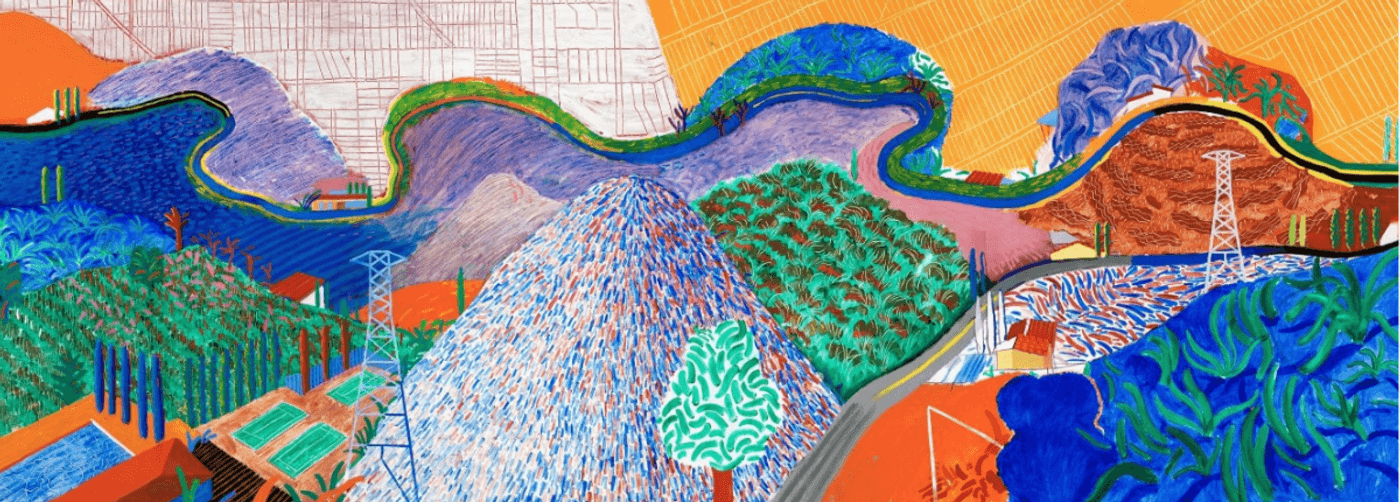
David Hockney, Mulholland Drive: The Road to the Studio, 1980
Los Angeles County Museum of Art, Purchased with funds provided by the F. Patrick Burns Bequest
Begin your journey on the top floor of the Broad Contemporary Art Museum building (BCAM). Step into the Modern Art galleries and make a beeline for the largest canvas ever created by one of the most important queer artists, David Hockney (1937-2026).
Mulholland Drive: The Road to the Studio (1980) is his love letter to the city that allowed him to imagine an entirely new future. Tracing the daily trip between his home and his West Hollywood studio, Hockney transforms winding roads into ribbons of electric color. Hillside homes, swimming pools, and tennis courts tumble across the canvas, drawing the viewer into the exhilarating ride.
Just around the corner, we find Beauford Delaney’s (1901-1979) Portrait of Claude McKay (1944). Delaney’s expressive brushwork matches the intensity of McKay’s writings on the injustices of Black life in America. The result is a joint endeavor from two queer Black pioneers who shaped the Harlem Renaissance.
Close by is Frida Kahlo’s Weeping Coconuts (1951), one of her many works alluding to the pain she suffered through her life. This biographical fact has unfairly hijacked her narrative, obscuring how Frida defied social norms and engaged with love, gender, national identity, disability, and political struggle — themes that have turned her into a queer icon.
Frida’s bisexuality was never hidden. Her on-and-off partner, Diego Rivera, encouraged her relationships with women, and the museum’s decision to place Georgia O’Keeffe’s (1887-1986) Horse’s Skull with Pink Rose (1931) nearby creates an irresistible dialogue between these unconventional female artists.
Frida met O’Keeffe at Rivera’s New York MoMA show in 1931. Diego bragged that his wife flirted with O’Keeffe, which seems to be the case. In 1933, Frida wrote a friend saying, “O’Keeffe was in the hospital for three months, she went to Bermuda for a rest. She didn’t made [sic] love to me that time, I think on account of her weakness. Too bad.”
The final gallery offers a reminder that queerness doesn’t always announce itself through explicit subject matter. Ellsworth Kelly’s (1923-2015) Blue Curve II (1972) exemplifies how abstraction became part of a new visual language forged by openly gay artists.
Ay-O’s ‘Rainbow Heart’
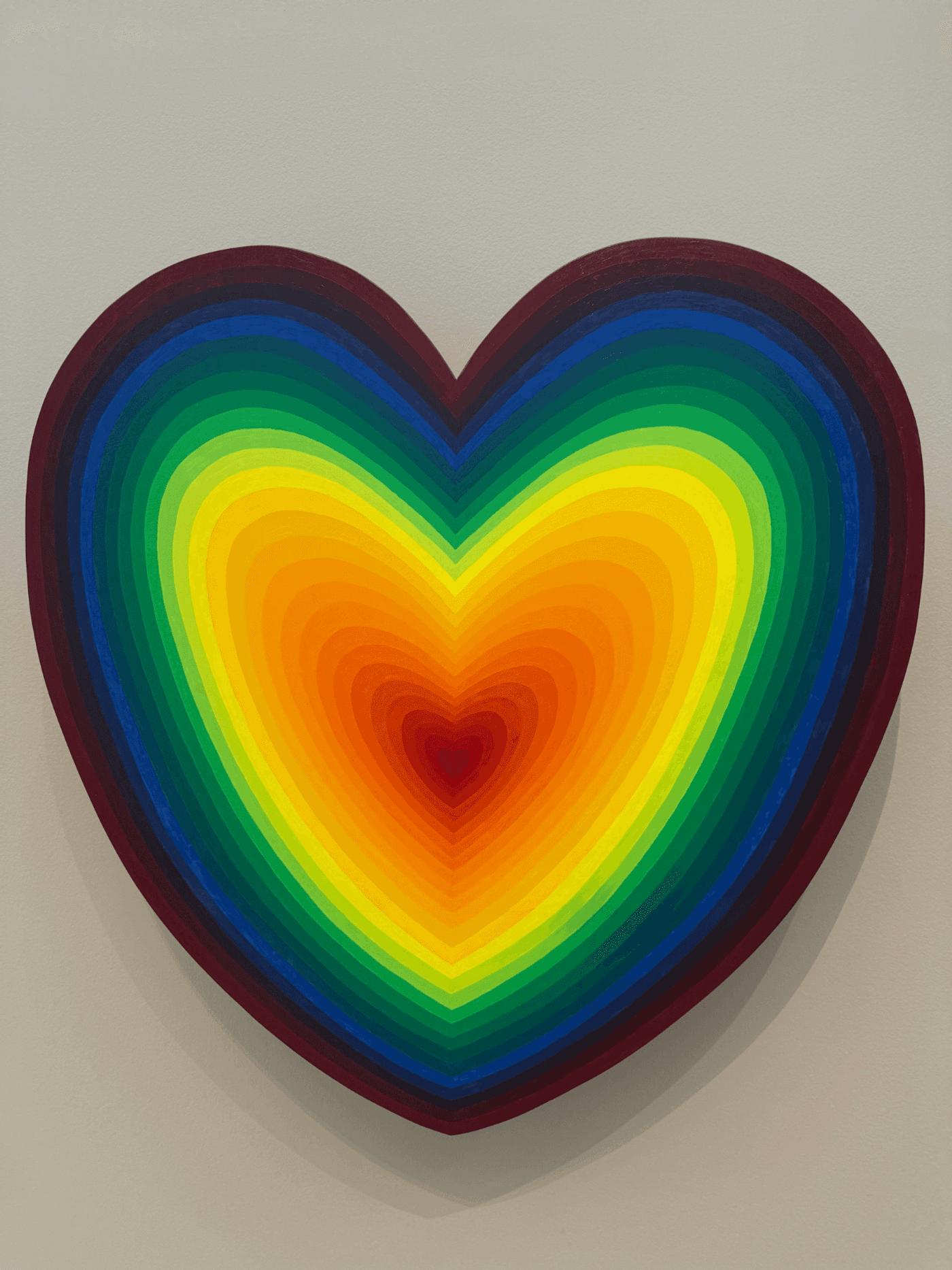
Ay-O, Rainbow Heart, 1965-1967
Gift of Riko Mizuno
Then, your eye catches Ay-O’s Rainbow Heart (1967), created a decade before the rainbow flag became the symbol of Pride. Stand close enough and its vibrating colors seem to shimmer, evoking the joy and liberation that queer communities have always created for themselves.
Ken Gonzales-Day’s haunting landscapes
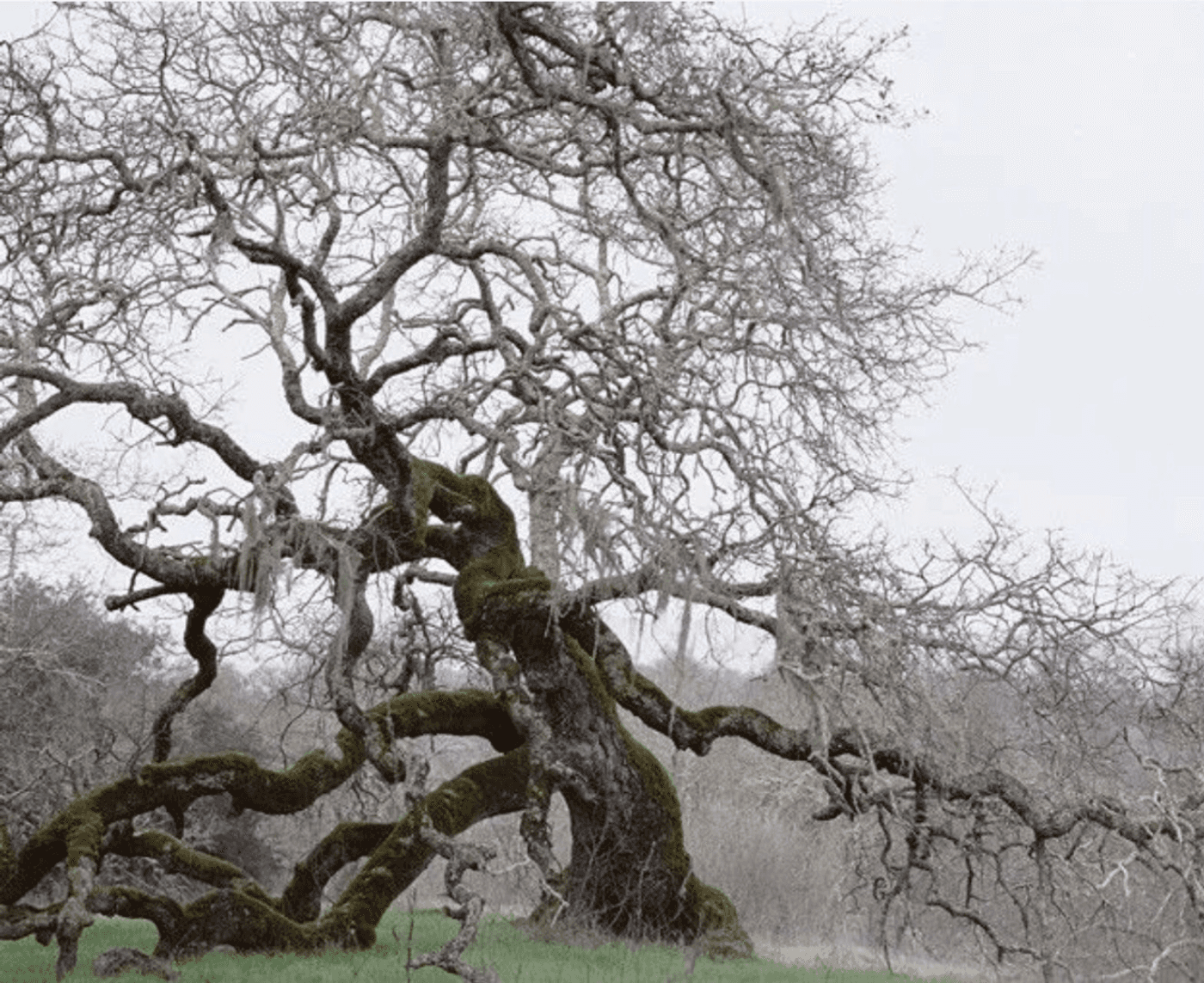
Ken Gonzales-Day, Run Up, 2002
Purchased with funds provided by Paula Ely and Cesar Rueda with additional funds provided by the Ralph M. Parsons Fund
Gallery 30 in the Pacific Ocean Galleries features one of Ken Gonzales-Day’s haunting landscapes. His series Searching for California’s Hang Trees (2002–2007) documents sites where lynchings occurred, deliberately excluding the victims to focus attention on the landscape itself. Gonzales-Day’s research revealed that Native Americans, Chinese immigrants, and Latinos were among the primary victims of lynching in early California, expanding the national conversation about racial violence beyond the American South.
Rafa Esparza’s adobe walls
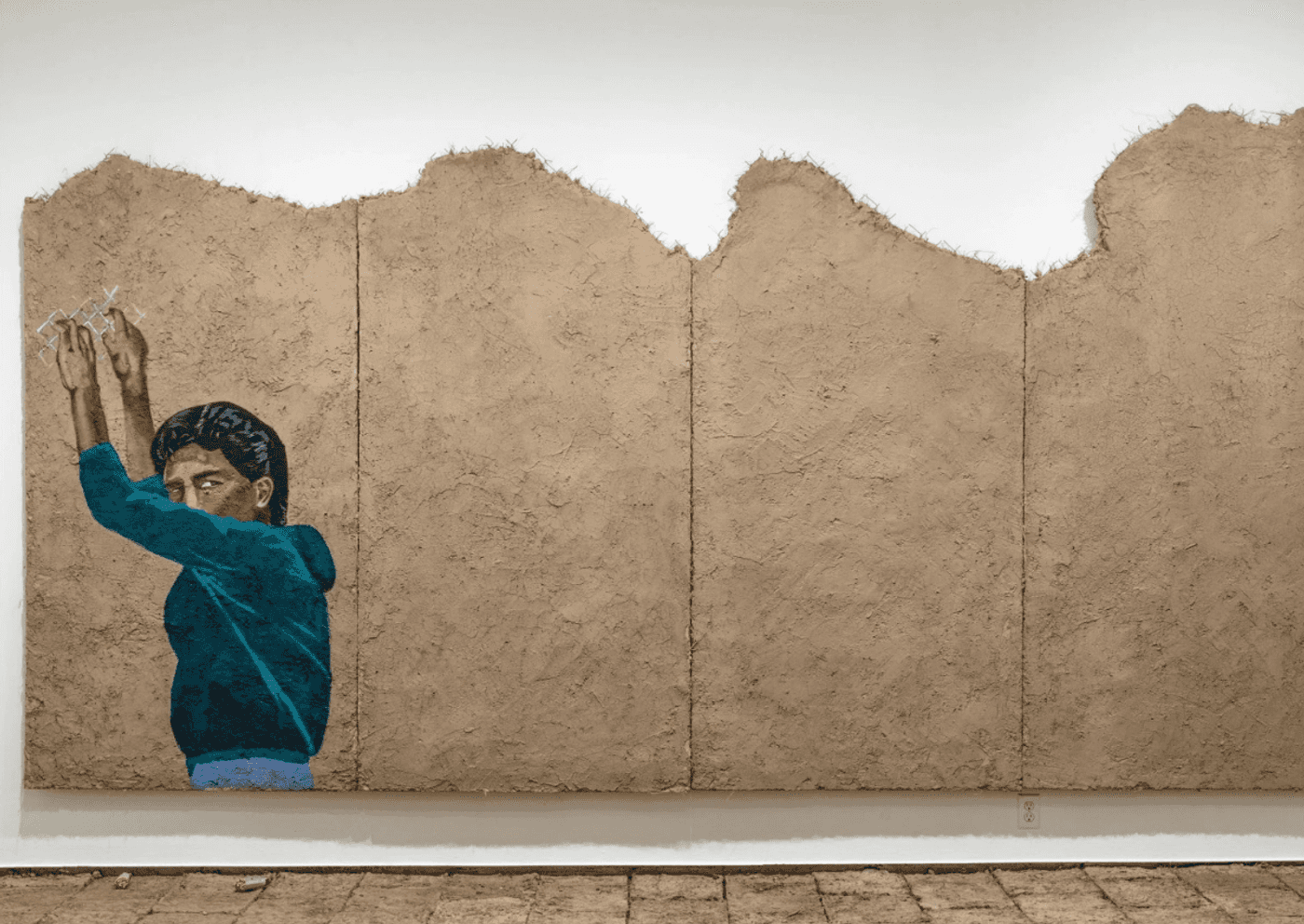
Rafa Esparza, …we are the mountain, 2019
Los Angeles County Museum of Art, with funds provided by AHAN: Studio Forum, 2020 Art Here and Now purchase, and the Vincent Price Art Museum, with funds provided by the Vincent Price Art Museum Foundation, and Kevan and Norma Newton
Next, visit Gallery 28, where queer artist Rafa Esparza’s …we are the mountain (2019) consists of large adobe panels created from earth. He uses adobe to symbolize brown-skinned people and the spaces they inhabit, suggesting that although adobe is strong, it requires care and commitment to survive.
The work draws on Esparza’s experience growing up as a queer Latino in Los Angeles, exploring how marginalized communities build their own spaces of belonging.
Carlos Almaraz’s Los Angeles
In the same gallery, Carlos Almaraz’s (1941–1989) explosive painting captures Los Angeles as both dream and nightmare. A founding member of the Chicano art collective Los Four, Almaraz lived openly as bisexual later in life. His car crash series became a metaphor for the city’s collisions between cultures, politics, and personal desires — themes that affected him deeply.
The perfect ending: Shiva and Parvati
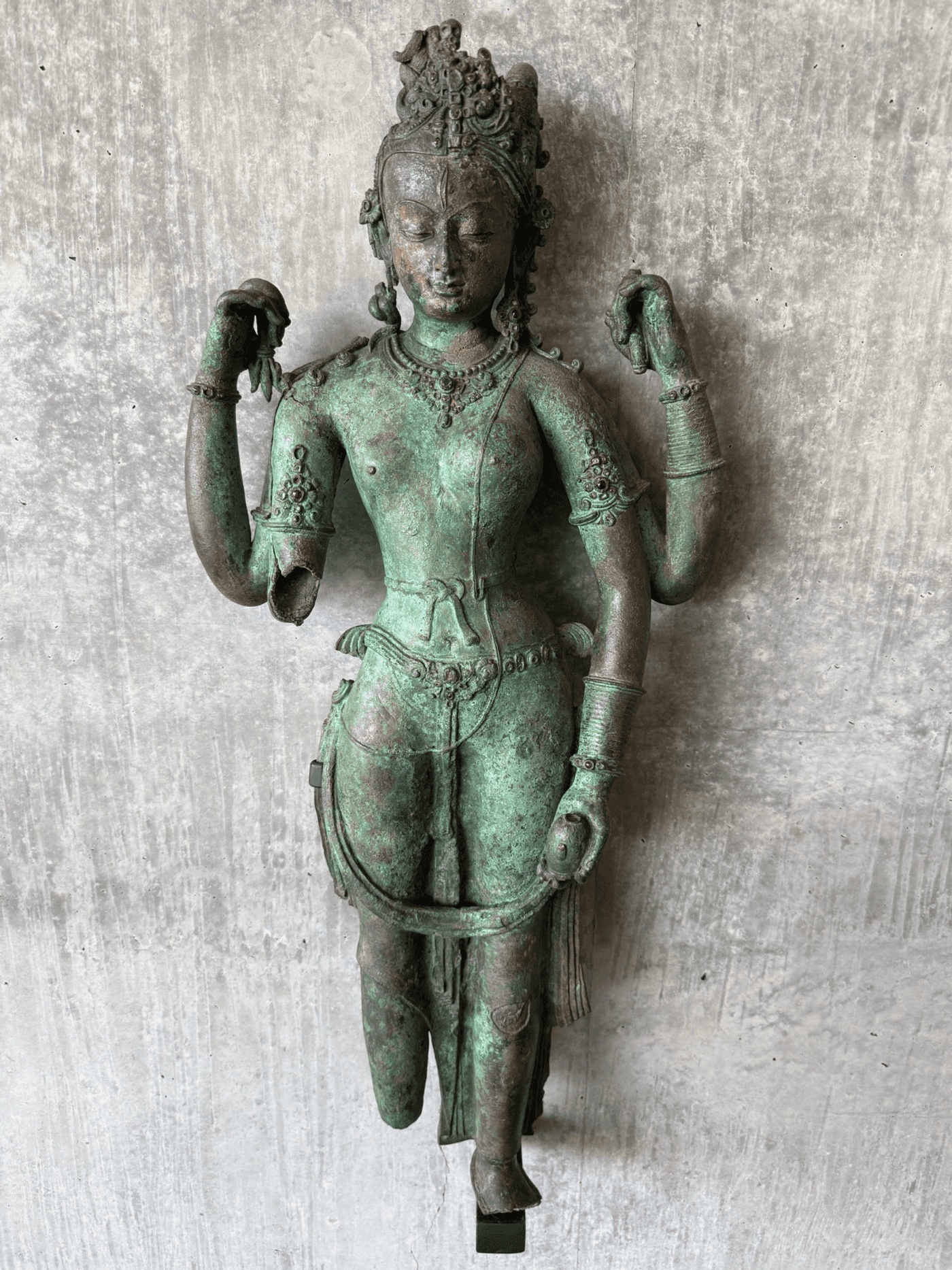
Unknown, The Androgynous Form of Shiva and Parvati (Ardhanarishvara), circa 1000
From the Nasli and Alice Heeramaneck Collection, Museum Associates Purchase
It is hard to imagine a more fitting conclusion to this queer tour than one of LACMA’s most quietly revolutionary objects, even though it is over 1,000 years old.
Holding court in the Indian Ocean Galleries, the Nepalese bronze sculpture Ardhanarishvara The Androgynous Form of Shiva and Parvati (circa 1000) offers a breathtaking meditation on gender fluidity.
The right side is the male Shiva, while the left is the female Parvati, embodying the Hindu concept that masculine and feminine energies are inseparable. It is a timely reminder that ideas many people consider contemporary have existed for centuries in cultures around the world.
These 20 works are only the beginning. Countless other objects invite queer readings, reminding us that LGBTQ+ history is not an isolated chapter tucked away in a separate gallery. It stretches across continents, religions, centuries, and artistic movements even though most museums have refused to explicitly label it as such.
Once you learn to recognize the clues, you notice them everywhere. LACMA’s new installations encourage us to forge our own path, wandering as Hockney suggests rather than following a predetermined direction.
Ignacio Darnaude is an art historian whose ongoing project, Breaking the Gay Code in Art, explores queer narratives hidden within art history. His lectures and articles are featured on his Instagram account, @breakingthegaycodeinart.
Learn more about LACMA and its collections at lacma.org.
To read full article visit OUT magazine here